> ## Documentation Index
> Fetch the complete documentation index at: https://docs.datafold.com/llms.txt
> Use this file to discover all available pages before exploring further.
# Lineage
> Datafold offers a column-level and tabular lineage view.
## Column-level lineage
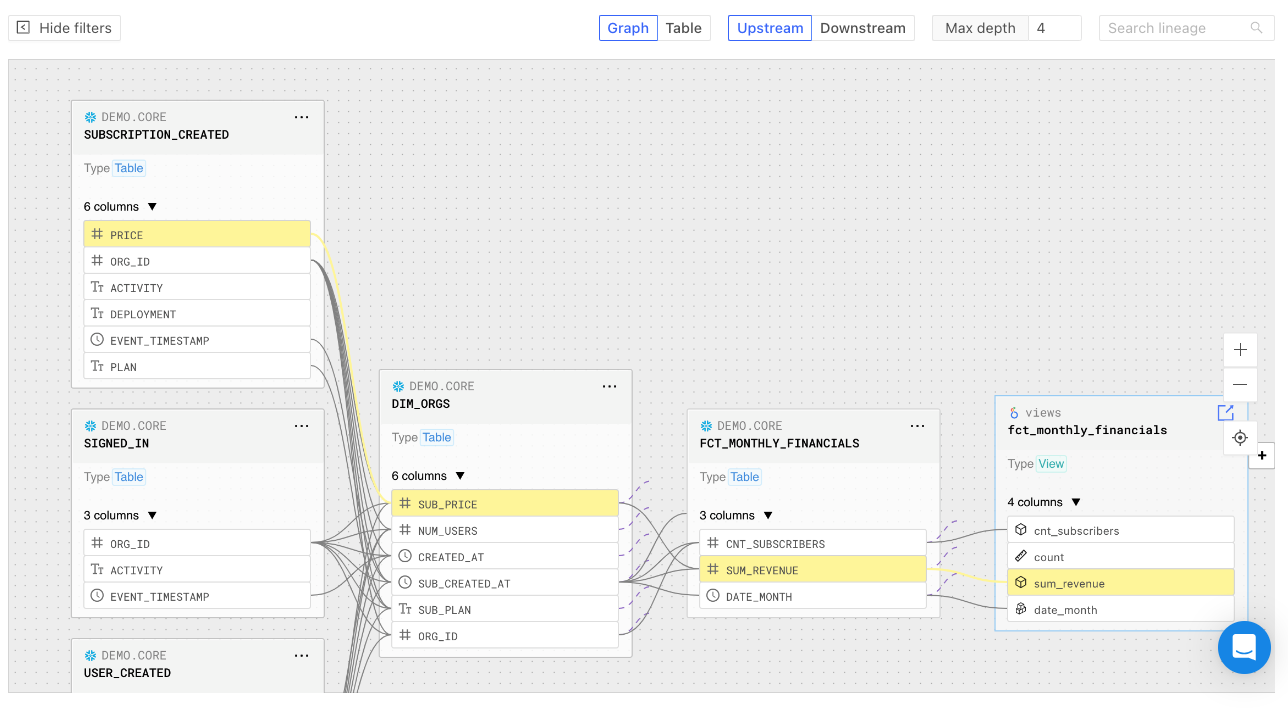
Datafold's column-level lineage helps users trace and document the history, transformations, dependencies, and both downstream and upstream processes of a specific data column within an organization's data assets. This feature allows you to pinpoint the origins of data validation issues and comprehensively identify downstream data processes and applications.
To view column-level lineage, click on the **Columns** dropdown menu of the selected asset.
 ### Highlight path between assets
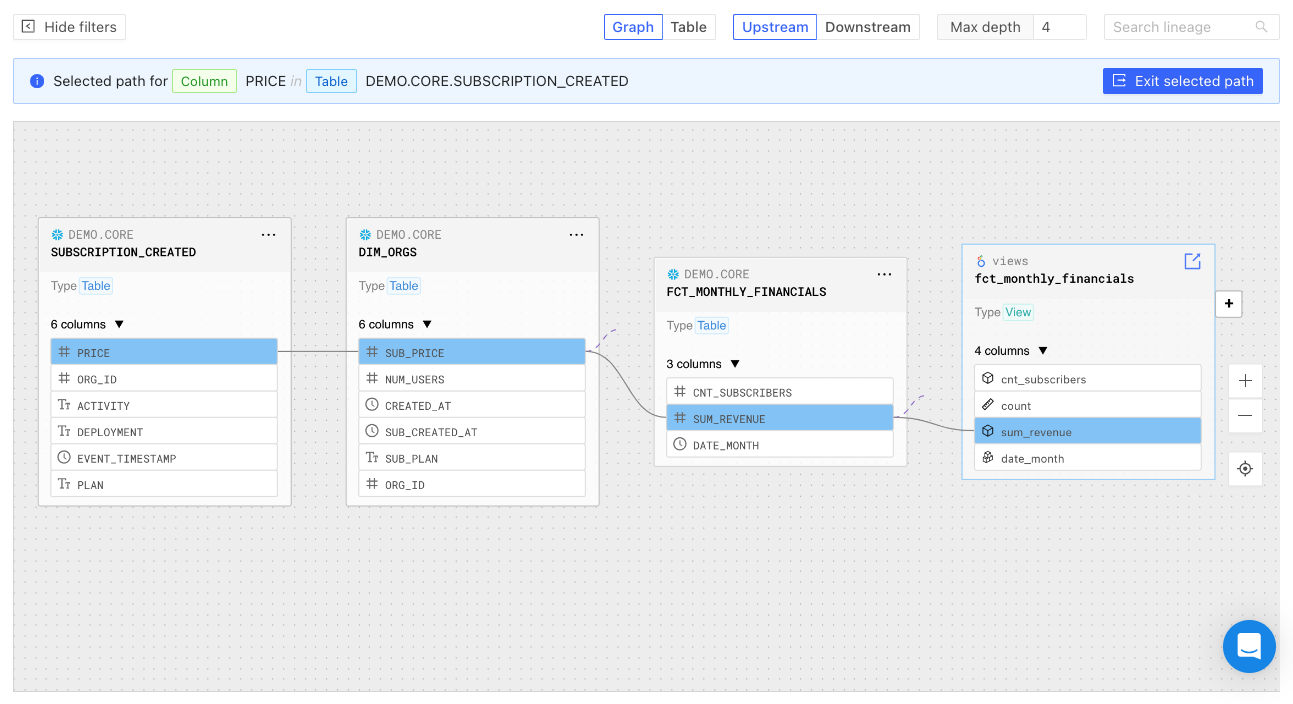
To highlight the column path between assets, click the specific column. Reset the view by clicking the **Exit the selected path** button.
### Highlight path between assets
To highlight the column path between assets, click the specific column. Reset the view by clicking the **Exit the selected path** button.
 ## Tabular lineage
Datafold also offers a tabular lineage view.
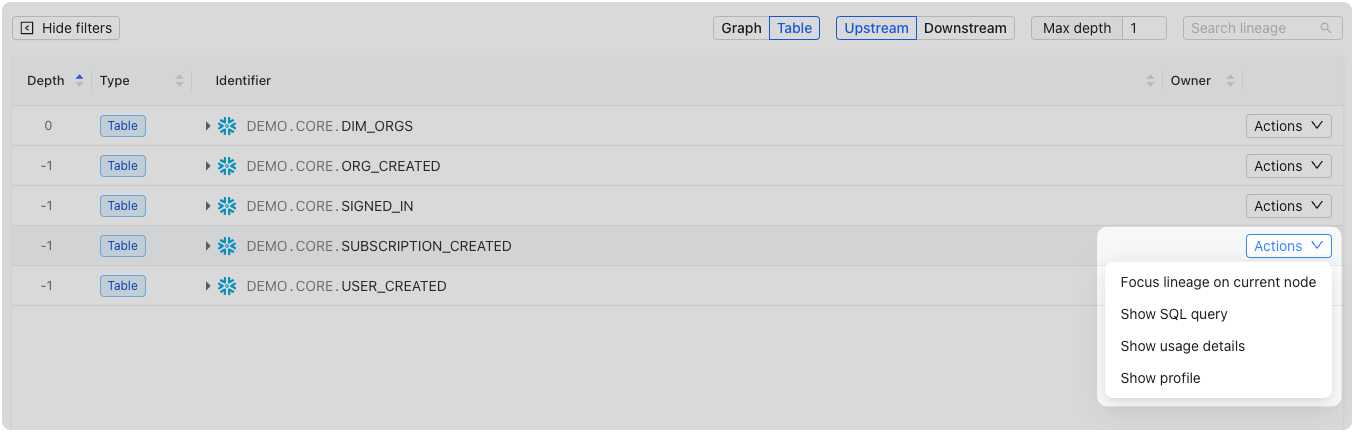
You can sort lineage information by depth, asset type, identifier, and owner. Click on the **Actions** button for further options:
## Tabular lineage
Datafold also offers a tabular lineage view.
You can sort lineage information by depth, asset type, identifier, and owner. Click on the **Actions** button for further options:
 ### Focus lineage on current node
Drill down onto the data node or column of interest.
### Show SQL query
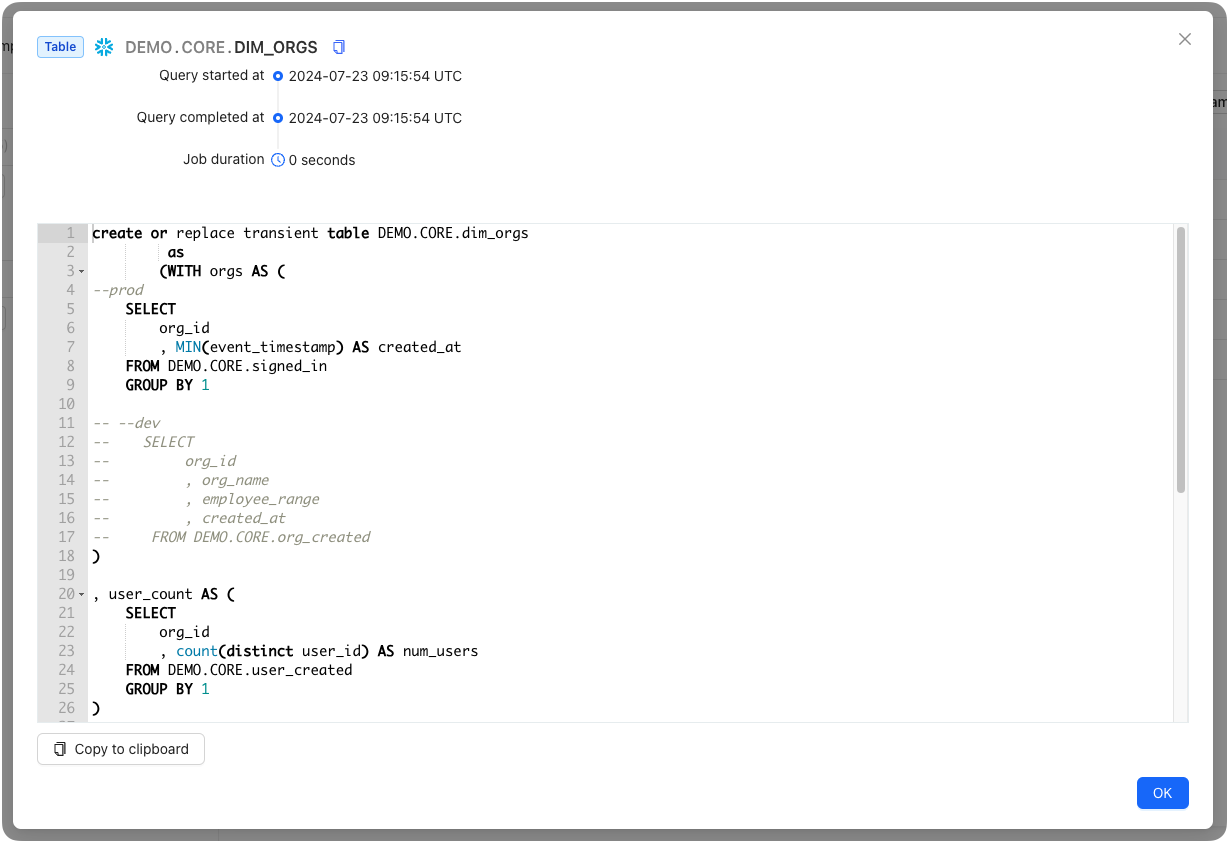
Access the SQL query associated with the selected column to understand how the data was queried from the source:
### Focus lineage on current node
Drill down onto the data node or column of interest.
### Show SQL query
Access the SQL query associated with the selected column to understand how the data was queried from the source:
 ### Show usage details
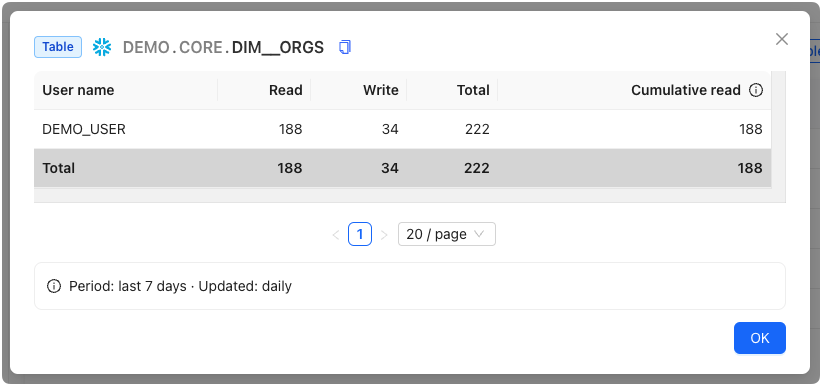
Access detailed information about the column's read, write, and cumulative read (the sum of read count including read count of downstream columns) for the previous 7 days:
### Show usage details
Access detailed information about the column's read, write, and cumulative read (the sum of read count including read count of downstream columns) for the previous 7 days:
 ## Search and filters
Datafold offers powerful search and filtering capabilities to help users quickly locate specific data assets and isolate data connections of interest.
In both the graphical and tabular lineage views, you can filter by tables or columns within tables, allowing you to go as granular as needed.
## Search and filters
Datafold offers powerful search and filtering capabilities to help users quickly locate specific data assets and isolate data connections of interest.
In both the graphical and tabular lineage views, you can filter by tables or columns within tables, allowing you to go as granular as needed.
 ### Table filtering
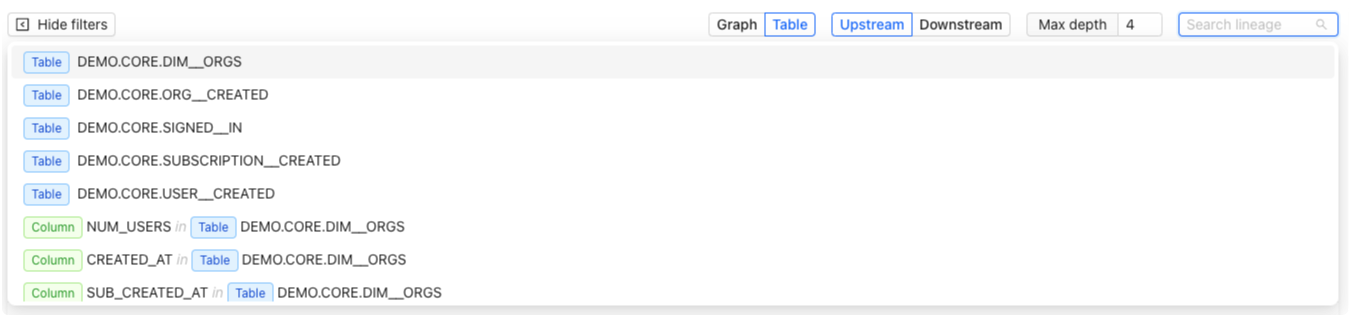
Simply enter the table's name in the search bar to filter and display all relevant information associated with that table.
### Column filtering
To focus specifically on columns, you can search using a combination of keywords. For instance, searching "column table" will display columns associated with a table, while a query like "column dim customer" narrows the search to columns within the "dim customer" table.
## Settings
You can configure the settings for Lineage under Settings > Data Connections > Advanced Settings:
### Table filtering
Simply enter the table's name in the search bar to filter and display all relevant information associated with that table.
### Column filtering
To focus specifically on columns, you can search using a combination of keywords. For instance, searching "column table" will display columns associated with a table, while a query like "column dim customer" narrows the search to columns within the "dim customer" table.
## Settings
You can configure the settings for Lineage under Settings > Data Connections > Advanced Settings:
 ### Schema indexing schedule
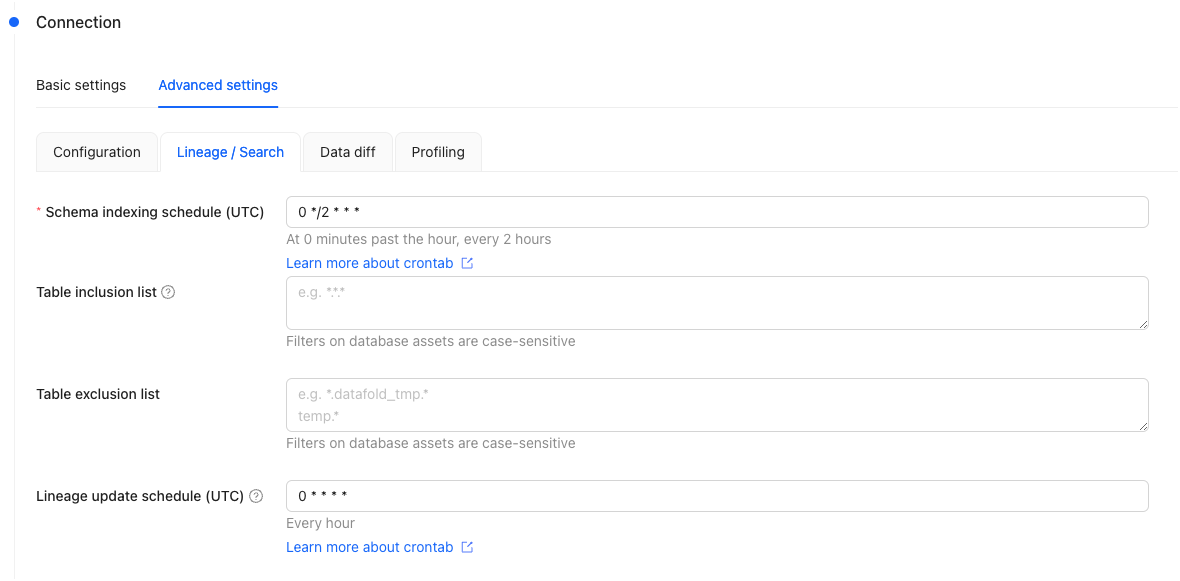
Customize the frequency and timing of when to update the indexes on database schemas. The schedule is defined through a cron tab expression.
### Table inclusion/exclusion
You can filter to include and/or exclude specific tables to be shown in Lineage.
When the inclusion list is set, only the tables specified in this list will be visible in the lineage and search results.
When the inclusion list is not set, all tables will be visible by default, except for those explicitly specified in the exclusion list.
### Lineage update schedule
Customize the frequency and timing of when to scan the query history of your data warehouse to build and update the data lineage. The schedule is defined through a cron tab expression.
## FAQ
Datafold computes column-level lineage by:
1. Ingesting, parsing and analyzing SQL logs from your databases and data warehouses. This allows Datafold to infer dependencies between SQL statements, including those that create, modify, and read data.
2. Augmenting the metadata graph with data from various sources. This includes metadata from orchestration tools (e.g., dbt), BI tools, and user-provided documentation.
Currently, the schema of the Datafold GraphQL API, which we use to expose lineage information, is not yet stable and is considered to be in beta. Therefore, we do not include this API in our public documentation.
If you would like to programmatically access lineage information, you can explore our GitHub repository with a few examples: [datafold/datafold-api-examples](https://github.com/datafold/datafold-api-examples). Simply clone the repository and follow the instructions provided in the `README.md` file.
### Schema indexing schedule
Customize the frequency and timing of when to update the indexes on database schemas. The schedule is defined through a cron tab expression.
### Table inclusion/exclusion
You can filter to include and/or exclude specific tables to be shown in Lineage.
When the inclusion list is set, only the tables specified in this list will be visible in the lineage and search results.
When the inclusion list is not set, all tables will be visible by default, except for those explicitly specified in the exclusion list.
### Lineage update schedule
Customize the frequency and timing of when to scan the query history of your data warehouse to build and update the data lineage. The schedule is defined through a cron tab expression.
## FAQ
Datafold computes column-level lineage by:
1. Ingesting, parsing and analyzing SQL logs from your databases and data warehouses. This allows Datafold to infer dependencies between SQL statements, including those that create, modify, and read data.
2. Augmenting the metadata graph with data from various sources. This includes metadata from orchestration tools (e.g., dbt), BI tools, and user-provided documentation.
Currently, the schema of the Datafold GraphQL API, which we use to expose lineage information, is not yet stable and is considered to be in beta. Therefore, we do not include this API in our public documentation.
If you would like to programmatically access lineage information, you can explore our GitHub repository with a few examples: [datafold/datafold-api-examples](https://github.com/datafold/datafold-api-examples). Simply clone the repository and follow the instructions provided in the `README.md` file.